


Showing up where people look starts with reading intent
A search ad answers someone at the very moment they type their need. When keywords, match types, bids, ad copy and landing page serve the same intent, the budget works efficiently.
Show up with the right message for people searching for your product or service on Google.
Brief-to-plan suggestions and ad account connections are on the roadmap; the demo shows the intended flow.
Share your goal and we’ll get back to you.
Search captures existing demand; social and digital channels build new demand.
Existing demand
You appear to people already searching.
Measurable results
Clicks, calls and forms are tracked.
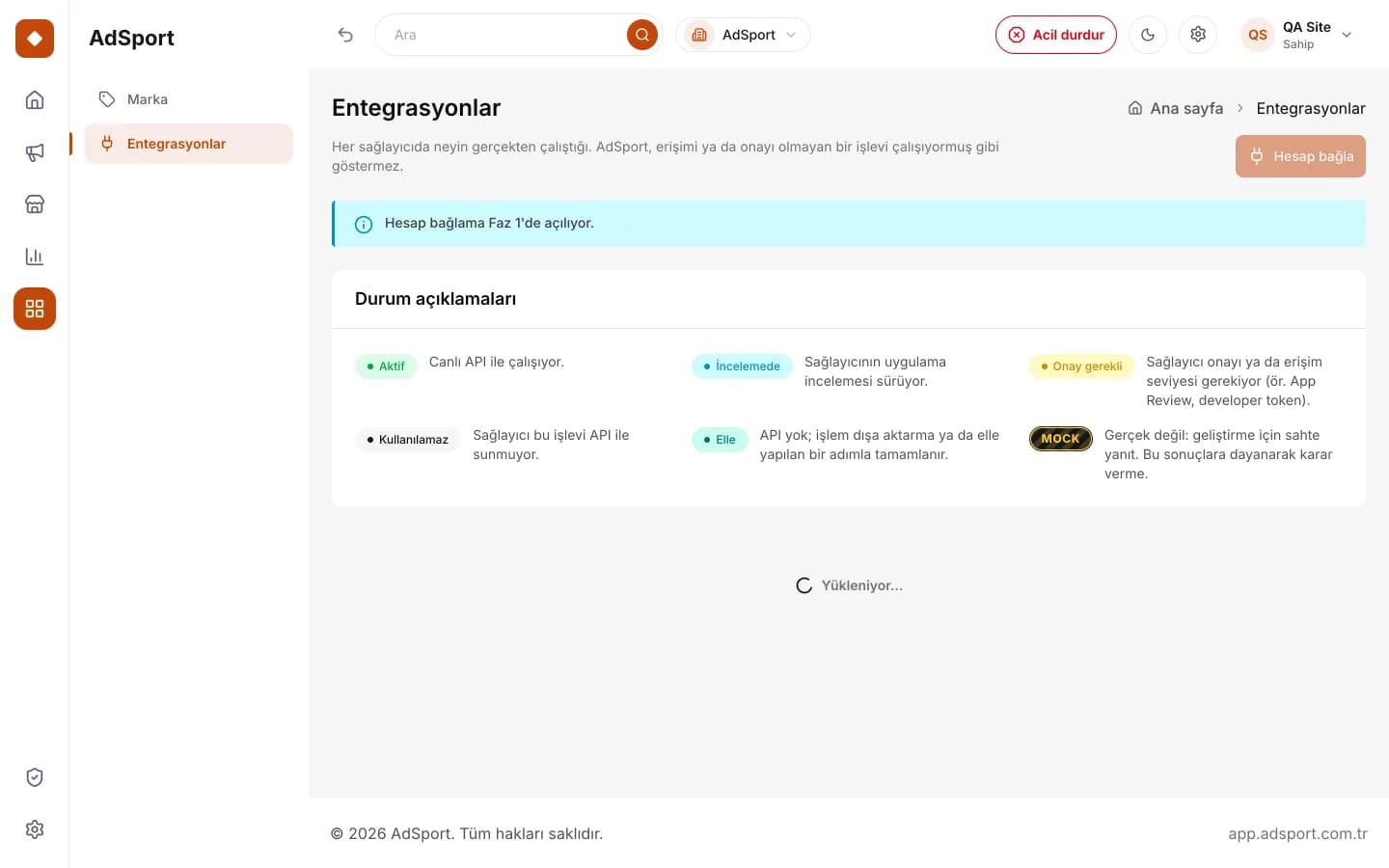 Real dashboard screen
Budget control
Daily caps and bid limits.

Quick start
Campaigns can be ready to launch fast.

Keyword research
Searches that signal intent are selected.

Ad copy
Headlines and descriptions that match the search.

Landing page
A fast page aligned with the message.

Optimization
Underperforming keywords are weeded out.
Most campaigns start with Google, because that is where most searches happen. Microsoft Advertising can provide complementary reach among desktop and business users, and Yandex among certain audiences. The choice depends on where your audience searches and how far your budget can be split.
Broad match increases reach but also opens the door to irrelevant searches. With enough conversion data and a strong negative keyword list, it can work well alongside automated bidding. In new accounts, starting with exact and phrase match and broadening as data builds up is the more controlled path.
An ad makes the user a promise; if the page does not deliver on it, the user leaves and the click is wasted. Search engines also factor page experience into their assessment of ad quality. Speed, message match and one clear action are often more effective than raising your bid.
Not at the moment. Google Ads, Microsoft Advertising and Yandex connections are on the roadmap, and campaign delivery is not yet available. Today you can see the status of each connection on the platform and get your account and team ready.

The form takes one minute.
A search ad answers someone at the very moment they type their need. When keywords, match types, bids, ad copy and landing page serve the same intent, the budget works efficiently.
Search ads are the ads that appear on the results page of Google Ads, Microsoft Advertising and Yandex in response to the query a user types. The advertiser decides which keywords to appear for, how much to bid on them and which page to send people who click.
The strength of this channel comes from the fact that demand already exists. Someone who types “dental clinic in Kadıköy” or “accounting software” is describing a need in their own words. Search intent is high, but volume is limited to what people actually search for, and cost per click can rise on highly competitive keywords.
In Türkiye, most searches happen on Google; Microsoft and Yandex offer complementary reach among certain audiences and on desktop.
The ad appears only when a relevant search is made. Because the user is already looking for a product, service or solution, the chance of a lead or sale after the click is generally higher than in passive impression-based channels.
Keyword-level bids, hour and day scheduling, and location and device settings let you manage in detail where the budget goes. Negative keywords keep you out of irrelevant searches from the start.
The search terms report shows how people describe their needs in their own words. That insight is a valuable source for improving ad copy, site content and the way you present your products.
Search ads give you visibility for keywords where you are not yet strong in organic results. Seeing which keywords deliver results also guides long-term content and SEO priorities.
Any product or service people type into a search engine when they need it suits this channel. What makes the difference is offering the right proposition for the searched keyword and being able to handle the incoming demand.
For services where users want a solution right away, such as locksmiths, repair technicians, movers and maintenance, a search ad is often the first point of contact.
For business services where decision-makers research solutions, appearing in problem and category searches is a direct way to collect qualified leads.
For searches that include a city or district name, location targeting sends nearby customers to the business through a phone call or directions.
For searches by product name, shopping ads and text ads work together to show price and product information directly on the results page.
Searches focused on products, services, problems and competitors are listed. The intent behind each group is separated: users seeking information, comparing options or ready to buy each need a different message and a different page.
Keywords are split into tight ad groups that share the same intent. Exact, phrase and broad match types are chosen deliberately, and a negative keyword list is prepared from the very start.
The ad copy reflects the searched keyword and a concrete offer. The landing page delivers on the same promise above the fold, loads fast and offers one clear action; any mismatch hurts both cost and conversion.
You start with controlled bids until enough conversion data builds up, then can move to automated bidding strategies. Search terms are reviewed regularly, and irrelevant queries that drain the budget are added as negatives.
Search advertising is one of the most directly measurable channels: impressions, clicks, cost and conversions are tracked at keyword level. But if conversions are not defined correctly, the data misleads. Form submissions, phone calls and purchases should be defined as separate events, and duplicate records should be filtered out.
Impression share shows how much demand you are missing on competitive keywords. Where sales close over the phone or in store, the real return cannot be understood until the outcome of each lead is matched against CRM or sales records.
Metrics we track: Impression share · CTR · CPC · Quality Score · Conversion rate · CPA · ROAS
Search ads are among the first channels planned for connection on AdSport. We state plainly which parts are live today and which are on the roadmap.
Status on the Integrations page
The current status of the Google Ads, Microsoft Advertising and Yandex connections is shown with labels on the Integrations page in the platform.
Ad account connections
Connecting accounts on all three search networks, launching campaigns and changing bids are on the roadmap.
Search Console and GA4
Connections that will bring organic search data and site analytics into the same report are planned; they cannot be connected yet.
Budget rules
A rules engine for daily and monthly caps, a maximum rate of change and an approval threshold is in development; the emergency stop in the dashboard is live today.
Live: available today at app.adsport.com.tr. Roadmap: in development, not yet available.
Share your industry and target region, and we will discuss how much weight search ads should carry in your plan and what the first steps are.