


Not a single AI a team that works together
Specialist roles, each focused on its own job, are being designed to work on the same brief. Recommendations come with their reasoning; approval and the final decision always stay with you.
Strategy, audience, planning, copy and compliance roles work on the same brief; you make the final call.
The AI marketing team is on the roadmap; the demo shows the intended flow.
Share your goal and we’ll get back to you.
Each role builds on the previous one’s output; the flow finishes with your approval.
SpeedRoadmap
Days of preparation shrink to hours.
ConsistencyRoadmap
Every role works from the same brief.
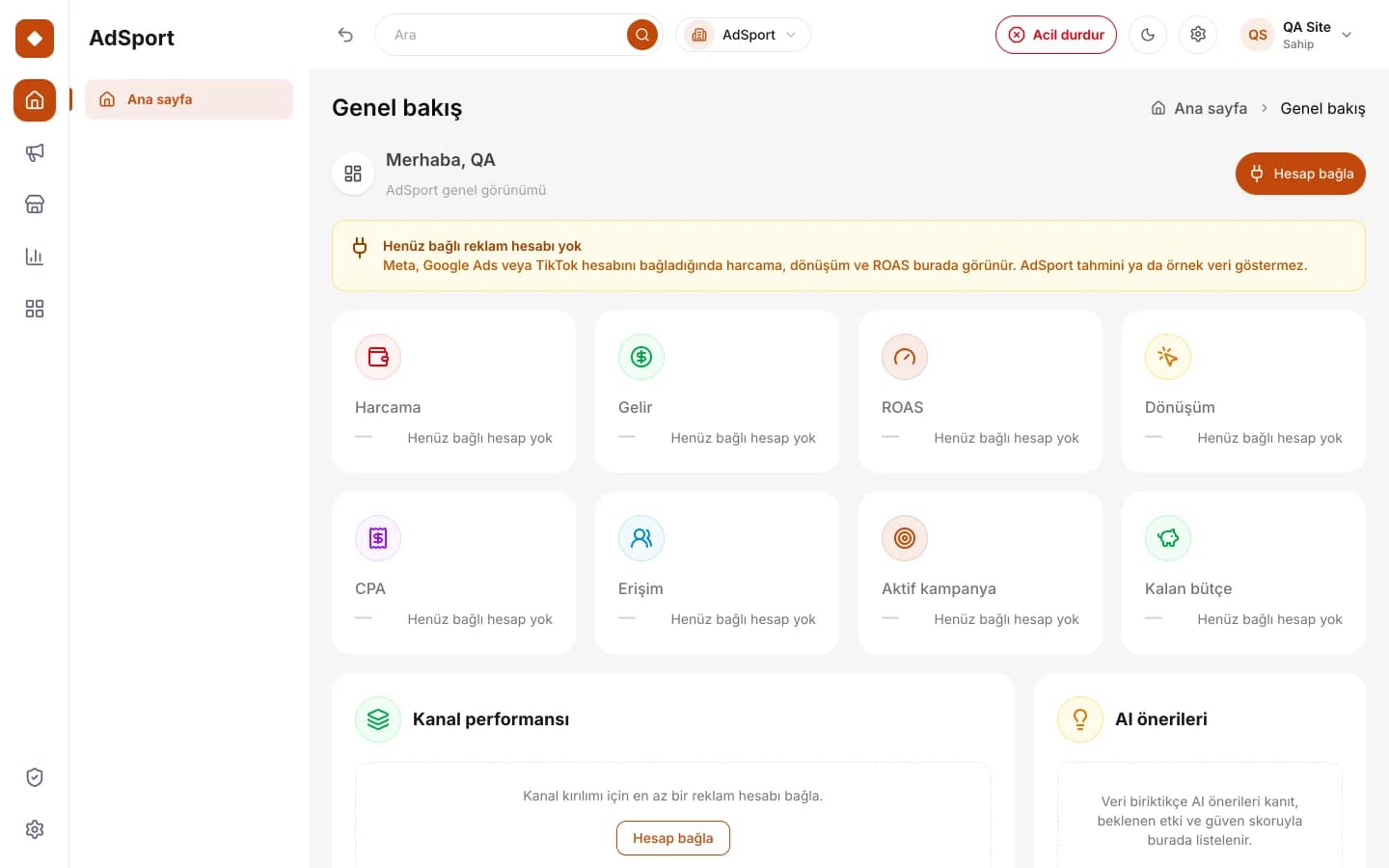 Real dashboard screen
Compliance awarenessRoadmap
Risky claims are flagged.

Human control
Nothing goes live without approval.

Brief
You set the goals and limits.

Roles at workRoadmap
Strategy, audience, plan, copy.

ReviewRoadmap
Compliance and brand consistency.

Approval
The final call is always yours.
No. The roles prepare recommendations and show their reasoning. Every step with consequences, such as going live, changing a budget or using a creative, depends on your approval. Budget limits and the emergency stop also set a frame the roles cannot go beyond.
Each role has a defined task: the Marketing Strategist handles the goal, the Media Planner the budget split, the Copywriter the copy and the Brand Guardian compliance. They all use the same brief, so their recommendations are designed to be consistent with one another.
Every call the roles make to ad accounts or external services will go through a single gateway. The gateway checks the permissions and cost of each action, stops anything outside the defined limits and keeps a log. This setup is on the roadmap.
The roles will open in stages, and we are not giving a firm date. Each capability will be marked on the platform and on this page as it opens. If you request a demo, we’ll share the rollout schedule with you as it becomes clearer.

The form takes one minute.
Specialist roles, each focused on its own job, are being designed to work on the same brief. Recommendations come with their reasoning; approval and the final decision always stay with you.
A general-purpose chat tool answers every question from the same point of view. Advertising, however, needs different kinds of expertise working together: the people who set strategy, allocate budget, choose keywords, write copy and read results each ask different questions.
AdSport’s AI marketing team is modeled on that division of labor. Each role has a defined task, inputs and outputs, and all of them draw on the same brief and the same definition of goal and budget. One role’s recommendation can become another’s input, but none of them makes decisions for you.
The team is on the roadmap and will open in stages. This page explains how the roles will work and which controls will limit them.
The Marketing Strategist covers goals and positioning, the Media Planner handles budget allocation, and the Search Ads Specialist and Paid Social Specialist set up the channels. Each recommendation comes from the relevant role’s perspective, with its reasoning.
The Creative Strategist sets the direction of the message, the Copywriter prepares copy that fits that direction, and the Brand Guardian checks for consistency with your brand voice, banned phrases and regulatory rules.
The Audience Analyst defines the target audience by needs, region and platform habits. The Competitor Researcher looks at advertising density and message overlap in your industry, and the plan takes shape around this information.
The Performance Analyst reads results and suggests improvements. The system is being designed to keep a record of which role recommended what, the reasoning behind it and what you approved.
Intended for businesses that want to handle work requiring specialist skills without building a full in-house marketing team, or to lighten the load on the team they already have.
Where marketing is run by one person or the owner, the roles take on the preparation work for plans, copy and analysis, while the decisions remain yours.
Existing teams can hand repetitive preparation work over to the roles and spend more time on strategy and approval steps.
Agencies can quickly turn client briefs into a first draft plan and copy options, then refine them with their own expertise.
In tightly regulated fields such as healthcare, education or finance, the Brand Guardian role makes a pre-publication compliance check a mandatory step in the process.
Every role reads the same brief: goal, budget, region, period, brand information and limits. That way each role works from the same assumptions instead of producing disconnected recommendations.
Strategy, the plan, channel setup, audience definition, a competitor summary and copy options are prepared by the relevant roles. Each recommendation comes with reasoning that states which information it is based on.
The roles’ access to ad accounts and external services will pass through a single tool gateway. The gateway checks the cost and permissions of every action, and nothing that exceeds a defined limit is carried out.
Every step with consequences, such as going live, changing a budget or using a creative, waits for your approval. You can edit recommendations, reject them or ask for them to be prepared again.
In the end, the roles’ work is measured by campaign results. The Performance Analyst uses the same metric definitions across all channels, so you can compare what changed after a recommendation was put into practice.
Alongside the results, the process is tracked as well: you can see which recommendations were accepted or rejected and how long approval steps took. These records help you judge how well the roles fit your business.
Metrics we track: Spend · Leads · Conversions · CPA · ROAS · CTR · Approved recommendations
The AI roles have not opened yet. The organization, team, permission and security foundation the roles will work on is live on the platform today.
Team members and roles
You can invite colleagues and assign roles to human users to decide who can see and approve what.
Emergency stop
The dashboard has an emergency stop button for halting campaigns in one step, so automation always has a brake.
Specialist AI roles
Ten specialist roles, from marketing strategy to brand protection, are on the roadmap and are planned to open in stages.
Cost- and permission-controlled gateway
The gateway that governs the roles’ access to ad accounts and external systems through cost and permission limits will open together with the roles.
Live: available today at app.adsport.com.tr. Roadmap: in development, not yet available.
In a demo, we’ll show how the roles would divide the work on your brief and where the approval steps sit.