

One brief, one plan digital and traditional together
Write down your goal, budget and region once, and get a proposed plan that shows search, social, influencers, local publishers and traditional media side by side.
Enter your goal, budget and region once; digital and traditional channels come together in one plan.
Brief-to-plan suggestions and ad account connections are on the roadmap; the demo shows the intended flow.
Share your goal and we’ll get back to you.
Every channel’s flight dates share one calendar; overlaps and gaps are spotted early.
Regional and audience split
Budget goes where your audience is.
Goal-driven mix
Each channel’s role in the plan, spelled out.
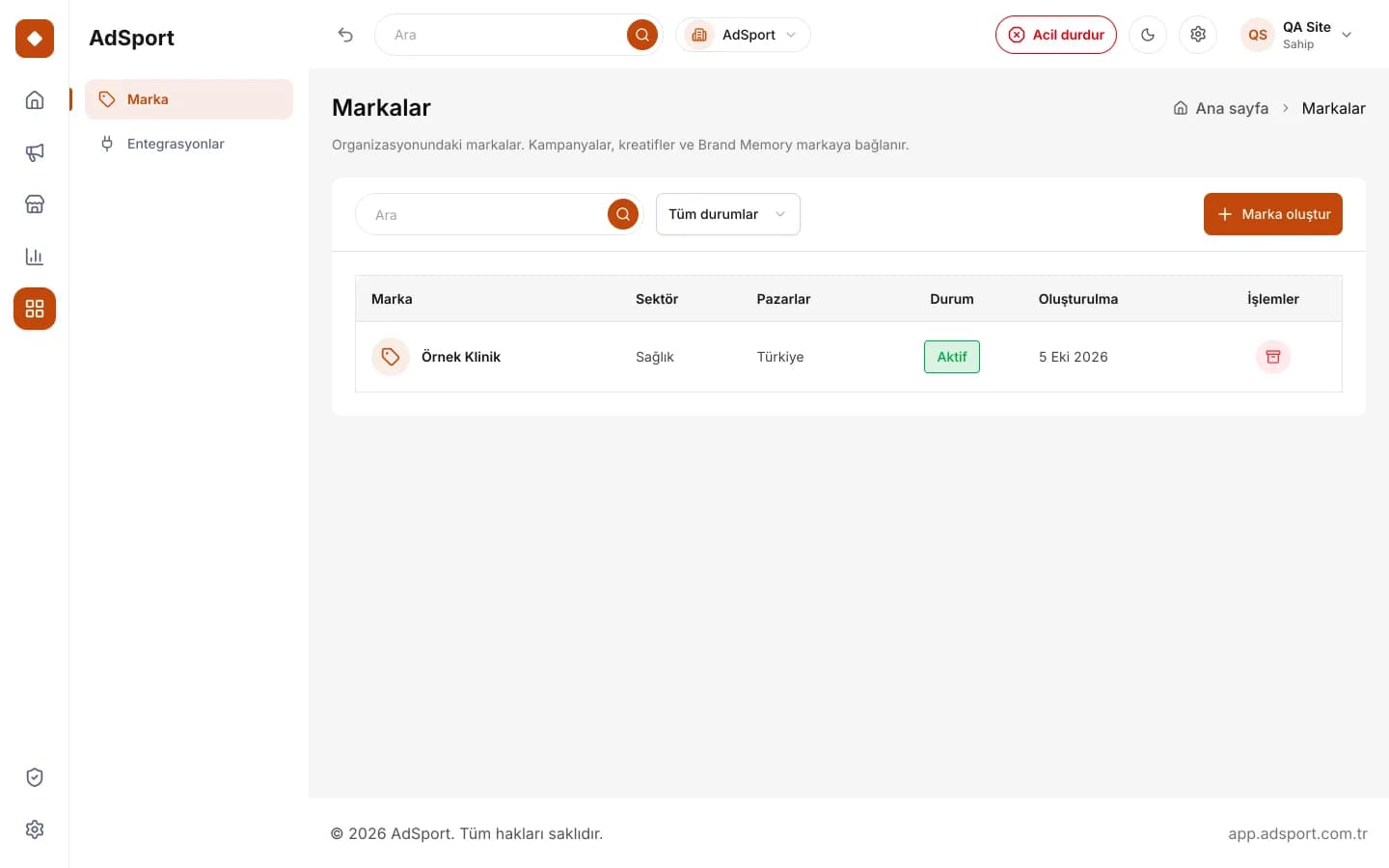 Real dashboard screen
Visible costs
Channel shares at a glance.
Shared calendar
Channels reinforce one another.

Brief
Goal, budget, region and period.

ResearchRoadmap
Audience and channel costs are analyzed.

Proposed planRoadmap
Channel shares and the reasoning behind them.

Approval
The plan is final only with your approval.
No. The plan is a proposal prepared for your review. You can change channel shares, the schedule and the limits, and the plan becomes final only with your approval. Once ad account connections open, the publishing step will also require a separate approval.
Yes. If you list the channels you do not want to use in your brief, the plan is built within that limit. Traditional channels are not required; they are suggested as an option only where they could contribute to your goal.
For digital channels, costs will be based on platform data and your past campaigns once account connections open. For traditional channels, inventory and pricing will come through agreements with media partners. There is currently no price list on the site or in the platform.
You can invite team members and assign roles, so your agency can review the plan with you in the same organization. A multi-client structure that lets agencies manage several clients from one account, along with a white-label option, is on the roadmap.

The form takes one minute.
Write down your goal, budget and region once, and get a proposed plan that shows search, social, influencers, local publishers and traditional media side by side.
A media plan is the roadmap that shows which channel, region, audience and time period your budget will be spent on. When channels are planned separately, the same audience is reached several times, some regions are left uncovered and total spend only becomes visible at the end of the month.
On AdSport, planning starts with the brief. Goal, region, audience and limits are defined once; digital channels are assessed alongside radio, print, outdoor and screen advertising within the same plan and under the same budget cap.
The plan is a proposal. You review, change and approve the channel split, the schedule and the budget shares; the plan becomes final only with your approval.
Awareness, leads and sales each call for a different channel mix. The plan defines from the start how your goal will be measured in each channel, so the role and expected contribution of every channel are written down clearly.
A business serving a single city cannot use the same plan as a brand selling nationwide. Region, age, interests and platform habits are reflected in budget shares, and unnecessarily broad targeting is reduced.
Every channel is bought differently: per click, per impression, per spot, per billboard face or per day. The plan shows these differences in one table, so you can see at a glance how much of the budget each channel receives and why.
A radio spot, an outdoor face and a social campaign can support each other in the same period. A shared calendar is designed to keep channels from clashing or running disconnected from one another.
Designed for businesses that advertise, or plan to advertise, in more than one channel and want to tie their budget to a single cap and see the reasoning behind channel decisions.
Clinics, dealerships, schools or stores looking for customers in specific cities can plan regional targeting together with local channels.
Brands that use radio, print or outdoor alongside digital ads can track all of their spending under one plan and one budget.
For time-bound campaigns such as launches, season openings or enrollment periods, the schedule and budget weighting are planned in advance, which cuts down on last-minute decisions.
Companies managing several brand profiles under one organization can work with a separate brief and a separate plan for each brand.
You describe your goal, total budget, target regions, campaign period and any channels you do not want to use in a single text. The clearer the limits you set, the more focused the plan will be.
The industry, competitor density, search trends and channel costs are reviewed, and the target audience is defined by city, age, interests and platform habits. This step relies on the AI research layer on our roadmap.
The budget is split across search, social, video, influencers, local publishers and traditional channels. The proposal includes the rationale, timing and measurement method for each channel.
You can change channel shares, the schedule and the limits. No plan becomes final and no spending starts in any channel without your approval.
Every channel enters the plan with a measurement definition. In digital channels, clicks, leads and conversions can be tracked directly; in traditional channels, indirect indicators are used, such as estimated reach, proof of airing and any rise in searches or applications during the campaign period.
Planned and actual spend are kept side by side. That way you can see during the period which channel used its budget on time, which one fell behind and where the plan needs updating.
Metrics we track: Planned budget · Actual spend · Reach · Impressions · CPM · Leads · CPA
The account and brand foundation that planning will build on is available today. AI-assisted proposed plans and channel connections will open in stages.
Brand profiles
You can create several brand profiles under your organization and manage each brand and its team separately.
Integration status visibility
The Integrations page shows the real status of each provider, so you can clearly see which connections have not opened yet.
AI-proposed plan from a brief
A planning layer that turns your brief into market research, an audience definition and a proposed channel split is on the roadmap.
Traditional media booking
Radio, print, outdoor and DOOH booking will open with media partners; there is no inventory or pricing yet.
Live: available today at app.adsport.com.tr. Roadmap: in development, not yet available.
Share your goal and budget, and we’ll walk you through the planning flow for your industry in a demo.