


From catalog to cart one budget, measured sales
A plan that ties search, social, retargeting and influencer channels to the same sales goal and manages your budget within set limits during campaign periods.
Plan search, social and creator channels together for online stores, guided by sales goals.
Brief-to-plan suggestions and ad account connections are on the roadmap; the demo shows the intended flow.
Share your goal and we’ll get back to you.
Search drives steady sales; social and creator waves amplify campaign periods.
Sales-focused measurementRoadmap
Spend and revenue in one table.
Product-level campaigns
Bestsellers take the spotlight.
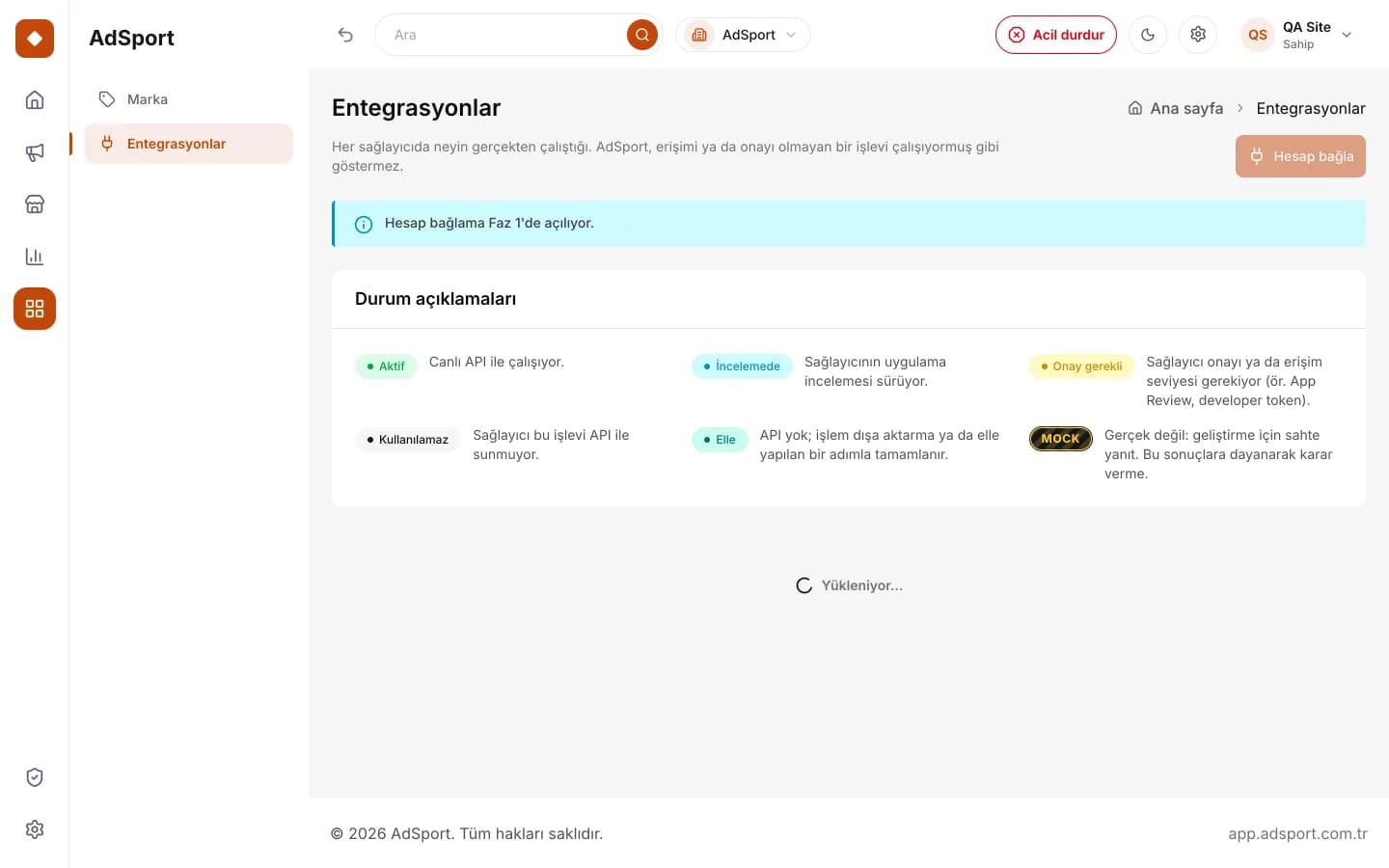 Real dashboard screen
Retargeting
A second touch for abandoned carts.

Seasonal planning
Budget weighted toward key dates.

Products and margins
Priority products are identified.

Channel mix
Search, social and creators.

Creative variants
Product images and short videos.

Sales reportRoadmap
Revenue and cost by channel.
Competition and cost per click usually rise during busy periods. That is why budget weighting and the campaign calendar are planned in advance and the daily cap is adjusted for that period. Once the budget rules engine opens, these limits will be applied automatically.
Sales on your own site will be trackable directly once measurement connections open. For marketplace sales, measurement is limited to the data the marketplace provides; the report states this limit clearly and flags estimated values separately.
The Ministry of Trade’s influencer guideline requires commercial collaborations to clearly state that they are advertising, for example with a #reklam (ad) or #işbirliği (collaboration) tag. Plans include this rule by default.
Retargeting depends on visitors’ cookie and consent preferences. Consent management on your site needs to be set up in line with KVKK, Türkiye’s personal data protection law. Responsibility lies with the site owner; we recommend working with your legal counsel on the details.

The form takes one minute.
A plan that ties search, social, retargeting and influencer channels to the same sales goal and manages your budget within set limits during campaign periods.
In e-commerce, advertising results can be measured directly: a product page is viewed, an item is added to the cart, a purchase is completed. This measurability is a major advantage, but when channels are managed in separate dashboards, the same sale can be counted in more than one channel and real efficiency becomes unclear.
Sales are not spread evenly across the year. During busy periods such as the November sale days, public holidays, back-to-school and season changes, competition and cost per click rise. Planning the budget for these periods in advance reduces rushed, last-minute decisions.
For e-commerce brands, AdSport ties search, social, retargeting and influencer channels to the same sales goal and the same measurement definition.
Someone searching for a specific product or category is close to buying. Catalog-based search and shopping ads carry that intent straight to the product page and bring in the traffic closest to a sale.
Social ads reach people who are not searching for the product yet but whose interests match, using image and video formats. They complement search ads for new product launches and for building interest before a campaign.
Retargeting lets you reach people again who visited your site and left without buying or abandoned their cart. Frequency caps and exclusion lists keep the same person from seeing too many ads.
Content creators who use the product and have a relationship of trust with their followers bring the promotion into a more natural context. Posts clearly state that they are advertising; the influencer task flow is on the roadmap.
For brands that sell through their own site or on marketplaces, track sales goals with ROAS and CPA and want to manage their budget carefully during campaign periods.
Brands selling through their own e-commerce site can connect their product catalog to ad channels and track performance at the product level.
Stores managing many products and categories can split the budget across categories according to profit margin and stock levels.
Brands whose sales concentrate in certain periods can plan their campaign calendar in advance and adjust the budget cap for those periods.
Brands preparing a launch can plan influencer, social and search channels on the same calendar to try to turn interest into sales.
The target ROAS or CPA, monthly budget, categories to highlight and campaign periods go into the brief. Which action counts as a sale is defined from the start.
Search, social, retargeting and influencer channels receive budget according to their role in the sales funnel. A separate budget weighting is suggested for busy periods.
Product visuals and campaign copy are prepared according to your brand rules. Discount and price statements are checked to make sure they match the actual campaign terms.
Once you approve, campaigns will go live in the connected accounts. Budget shifts are suggested within the cap and approval threshold you set, and the emergency stop is always at hand during busy periods.
The core e-commerce metrics are ROAS, which shows how much revenue your spend brings in, and CPA, which shows the average cost of a sale. These ratios become comparable when they are calculated with the same sales definition across all channels.
More than one channel can play a part on the path to a sale. Looking only at the last click can understate the contribution of channels that build interest, such as social or influencers; the report states this limit clearly.
Metrics we track: Spend · Revenue · ROAS · CPA · Conversions · Add to cart · CTR · CPC
The account, brand and team foundation that e-commerce planning will rely on is live today. Ad account connections and a unified sales report are on the roadmap.
Multiple brand profiles
You can manage several stores or brands under the same organization with separate profiles.
Emergency stop
If you notice a problem during a busy campaign period, you can halt campaigns from the dashboard in one step.
Search and social account connections
Connecting Google Ads, Meta and TikTok accounts and publishing campaigns will open in stages.
Influencer task flow
An influencer flow covering offers, content approval, post verification and payment is on the roadmap.
Live: available today at app.adsport.com.tr. Roadmap: in development, not yet available.
Share your categories and target ROAS, and we’ll show you in a demo how an e-commerce plan is built.